 Caregiver Stories
One caregiver’s medical imaging path from patient transport to MRI
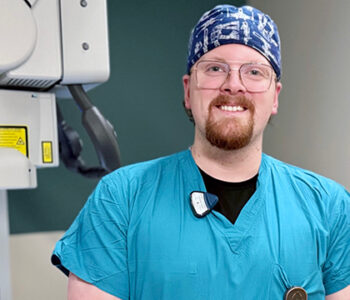
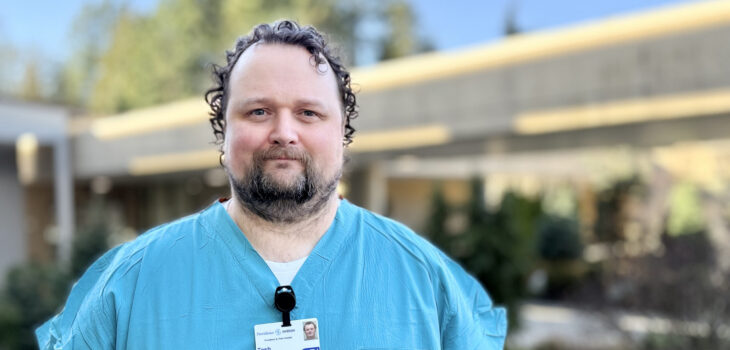
If you’re curious about a career in medical imaging but aren’t sure where to start, Tosh’s journey may inspire you: It shows there’s more than one way to get your foot in the door. Lead MRI Tech Tosh started with us as a patient transporter and his advice for job seekers is simple: gain exposure to different roles, ask questions and give yourself room to discover where you belong.
Explore careers firsthand
Tosh originally thought he wanted to be a nurse. After earning his CNA license, he realized nursing wasn’t the right fit. Unsure what to do next, he took a job in patient transport, which ultimately was the first step toward his perfect-fit career.
Why? Because working in transport gave Tosh exposure to a wide range of specialties and career paths across the hospital. “Transport’s for the whole hospital, so you interact and work with all of the different departments,” he says. “Everybody in imaging always seemed positive, like they were having a good time while doing the work.” Seeking that same rapport and teamwork, he decided to pursue imaging.
Tosh credits the Providence tuition reimbursement benefit and flexible scheduling with helping him finish X-ray school and move into the specialty he wanted. “I don’t know if I would’ve been able to financially get through that without tuition support,” he says.
Now, when people ask about how to break into health care, Tosh encourages them to start where they can see the whole hospital in motion. In transport, “you get to go everywhere,” he says, giving you a forum for asking questions about different roles and specialties.
Another way to explore a specialty firsthand is through job shadowing—particularly if you’re already in an X-ray program. “Come check it out,” Tosh says. “Many X-ray programs require observation hours before you even apply, and shadowing helps you determine whether the environment fits. We’re happy to tell anybody about what we do.”
Sometimes shadowing confirms you’re on the right path. Other times, it helps you discover another specialty that’s a better fit. “A friend once shadowed in MRI, realized it wasn’t for him, and found he loved X-ray instead,” Tosh says. “Both outcomes are wins, especially if you’re going to invest all that time into an education.”
For someone still figuring out what they want to do, both transport and shadowing can turn curiosity into a clear next step.
Ask questions. Find your fit.
In true “try before you buy” fashion, after transport, Tosh worked as an imaging assistant for both CT and MRI departments while he went to X-ray school. This role let him try each specialty and ask a ton of questions to figure out what was right for him.
What stood out for Tosh in MRI:
- The time for patient care: Many imaging exams happen quickly; for example, a chest X-ray may take only seconds. MRI is a different speed, and that’s exactly what Tosh loves. “Exams can last from 13 minutes for a lumbar spine to nearly three hours for a full study with contrast,” he says. “While I’m here spending time with you, you’re my only patient. That time lets us build real rapport.”
- A tight-knit team: “We rely on each other so much,” he says. With 10 people covering the department 24/7, everyone leans on each other, and small habits carry big weight. “I leave good notes so that the night tech can read my note and go, ‘I know exactly what he’s talking about. We’re good to go.’”
- The variety in his day: Tosh says that with a team running a single MRI at a hospital serving the ER, ICU, inpatients and outpatients all at once, his days rarely look the same. He loves that it “doesn’t get mundane.”
After spending time in the MRI department and asking questions, he knew he’d found the right fit. “I think I was a registered X-ray tech for six days before I started in MRI,” he laughs.
Ready to explore your next step?
A medical imaging career here means access to cutting-edge technology, supportive teams and an organizational culture of growth. If that sounds like the future you want, we’d love to welcome you. Explore open imaging roles.